
Nadi Shodhana
🇬🇧 Nadi Shodhana or Alternate Nostril Breathing, is a simple yet profound breathing practice that invites balance, calm, and clarity.
Begin by settling into a comfortable seated position, allowing the spine to rise naturally and the body to soften. Close the eyes and take a few moments to observe your breath, without changing it.
Bring your attention to the slow rhythm of breathing, allowing the abdomen to gently expand on the inhale and soften on the exhale.
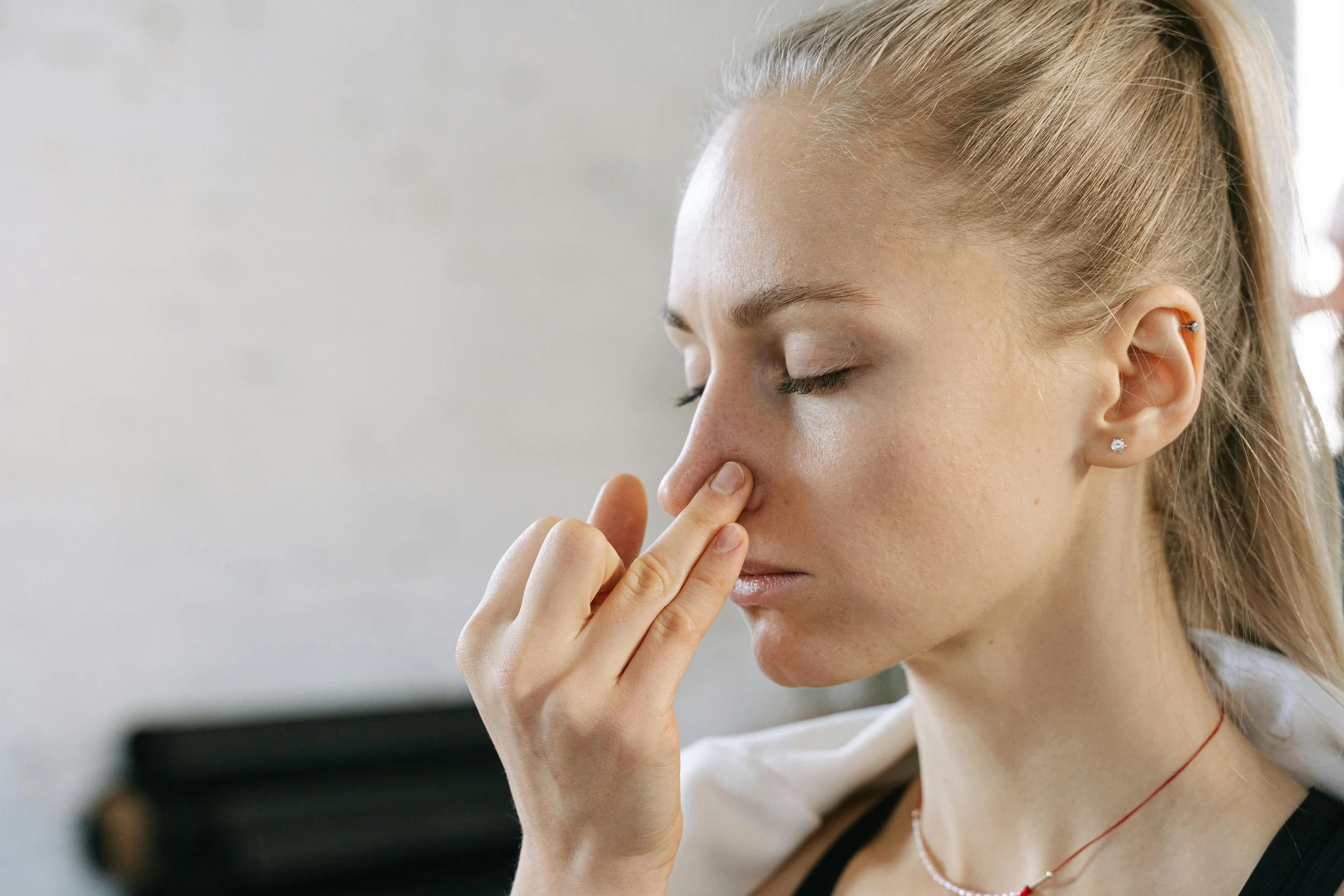
Hold the fingers of the right hand in front of the face. Place the index and middle finger gently on the forehead between the eyebrows. Both fingers should be relaxed. The thumb is above the right nostril and the ring finger above the left. These two digits will be used to control the flow of breath in the nostrils by alternately pressing on one and then the other.
Using the right thumb gently close the right nostril, empty the lungs through the left nostril, allowing the breath to flow slowly and evenly. Inhale slowly, through the open nostril, then close it with your ring finger. Open the right nostril and exhale slowly and deeply. Inhale through the right nostril; block with the thumb and exhale through the left nostril. Move unhurriedly, letting each inhale and exhale be smooth, steady, and equal in length.
Inhale through left nostril
Exhale through right nostril
Inhale through right nostril
Exhale through left nostril
As you breathe, imagine the breath traveling softly up and down the sides of the body, bringing balance and harmony. Allow the mind to rest in the rhythm of the breath, becoming quieter with each cycle.
Complete several gentle rounds (8 to 10 consecutive ones), pausing briefly at the crown of the head, and then allow the breath to return to its natural flow.
Benefits:
This practice calms the nervous system, soothes the mind, and invites deep relaxation. It supports restful sleep, eases anxiety, oxygenates the blood, and helps harmonise logical and intuitive faculties.
Nadi Shodhana
🇫🇷 Nadi Shodhana ou Respiration Alternée, est une pratique respiratoire simple et profonde, invitant à l’équilibre, au calme et à la clarté intérieure.
Installez-vous confortablement en position assise, la colonne vertébrale naturellement droite, le corps relâché. Fermez doucement les yeux et prenez quelques instants pour observer votre respiration, sans chercher à la modifier.
Amenez votre attention au mouvement lent et naturel du souffle, laissant l’abdomen se soulever à l’inspiration et s’adoucir à l’expiration.
Placez la main droite devant le visage. Posez délicatement l’index et le majeur sur le front, entre les sourcils. Ces deux doigts restent relâchés. Le pouce est placé au-dessus de la narine droite et l’annulaire au-dessus de la narine gauche. Ces deux doigts serviront à réguler le flux respiratoire en fermant alternativement chaque narine.
À l’aide du pouce droit, fermez délicatement la narine droite. Videz complètement les poumons en permettant au souffle de circuler lentement et harmonieusement par la narine ouverte. Inspirez ensuite lentement, régulièrement et profondément par la narine gauche, puis fermez-la à l’aide de l’annulaire. Ouvrez la narine droite et expirez lentement et profondément. Inspirez par la narine droite, fermez-la avec le pouce, puis expirez par la narine gauche. Laissez chaque inspiration et chaque expiration être fluides, calmes et de durée égale.
Inspirez par la narine gauche
Expirez par la narine droite
Inspirez par la narine droite
Expirez par la narine gauche
Imaginez le souffle qui circule doucement le long des côtés du corps, apportant équilibre et apaisement. Le mental se pose peu à peu, porté par le rythme régulier de la respiration.
Effectuez plusieurs cycles (8 to 10), en marquant une courte pause au sommet du crâne, puis laissez le souffle revenir à son rythme naturel.
Bienfaits:
Cette respiration apaise le système nerveux, calme le mental et favorise une relaxation profonde. Elle soutient le sommeil, aide à réduire l’anxiété, améliore l’oxygénation du sang et harmonise les fonctions logiques et intuitives.